Joints · November 3, 2025 · Grazyna Pajunen
Joint replacement — should you do it, or try to deter it?
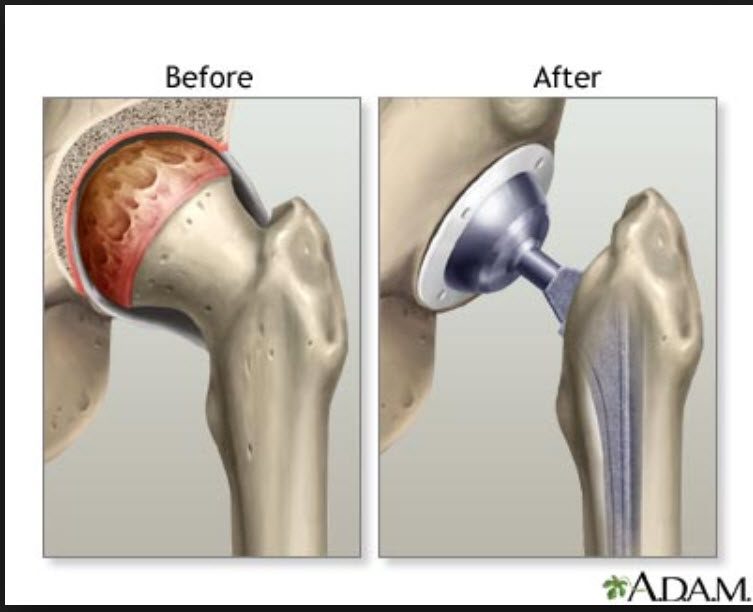
TKA is predicted to rise nearly five-fold by 2030. Surgery can reduce pain. It does not feed the tissue that failed.
The medical community most commonly recommends medications, injections, PRP, stem cells, cartilage transplants, and partial or total joint replacement. None of those options addresses the fundamental cause: a lack of nutrients, which leaves the body unable to rebuild itself.
Knee arthroplasty (TKA) is predicted to increase nearly five-fold by 2030, to 3.5 million surgeries a year. TKA reliably reduces joint pain. It fails to correct disability from dramatic declines in lower-extremity neuromuscular function in the early post-surgical period. Those deficits remain for years. And replacement is irreversible. You live with the consequences for the rest of your life, and the root issue — why the joint degenerated — is still unsolved.
Until the root cause is dealt with, other joints, eyes, gums, hair, nails, skin, back, and even internal organs can follow. Be proactive. If symptoms have started, find the cause instead of only treating the symptom.
Risks of replacement are real: anesthesia side effects, breathing problems and pneumonia, pain and swelling, metal allergy, implant failure, bleeding, blood clots, infection, fracture, dislocation, leg-length change, loosening, a harder second replacement, metal-on-metal ion release, and osteolysis. Even a perfect surgery replaces your joint with an artificial one. You will not rebuild it. Many activities — running, basketball, tennis — will always require care. Consider it a last resort.
The root cause is that with age and overuse we lose lubrication and buffering. We lose collagen and hyaluronic acid on the order of 10–15% a year; we dry out. As we lose HA we lose the ability to hydrate no matter how much water we drink. Food cannot replenish these in the right ratio and size. Molecules in food are about 100 times too big, and stomach acid destroys them. They need a form that starts absorbing under the tongue.
Undenatured collagen is too large — a basketball through a fishing net. Most hydrolyzed collagen is type I from cow or pig, still a little large, and it is not the type II of articular cartilage. Look for a natural type II matrix with HA and chondroitin, optimized size, liquid, clinically studied.
These statements have not been evaluated by the Food and Drug Administration. These products are not intended to diagnose, treat, cure, or prevent any disease. Individual results vary. This site is educational and is not a substitute for medical advice.
← All notes