Connective tissue · November 3, 2025 · Grazyna Pajunen
Is collagen enough to rebuild connective tissue?
Collagen is the brick. Hyaluronic acid is the cement. Chondroitin is the bounce. Look for a matrix, not a scoop.
Collagen is an essential building block for whole-body health. It is the most abundant protein in joint cartilage and the dermis of the skin. It provides the structural framework of connective tissues so skin stays firm and joints stay fluid. It makes up about 30% of the proteins in the body, and it is the glue for skin, tendons, ligaments, cartilage, bones, organs, veins, arteries, eyes, gums, and hair.
There are many types. Eighty to 90 percent belong to Type I, II, or III. Type II is the most important for joints. Type I fibrils have enormous tensile strength. By dry weight, collagen is about 75% of skin, 70% of ligaments, 85% of tendons, 90% of bone, 70% of joint cartilage.
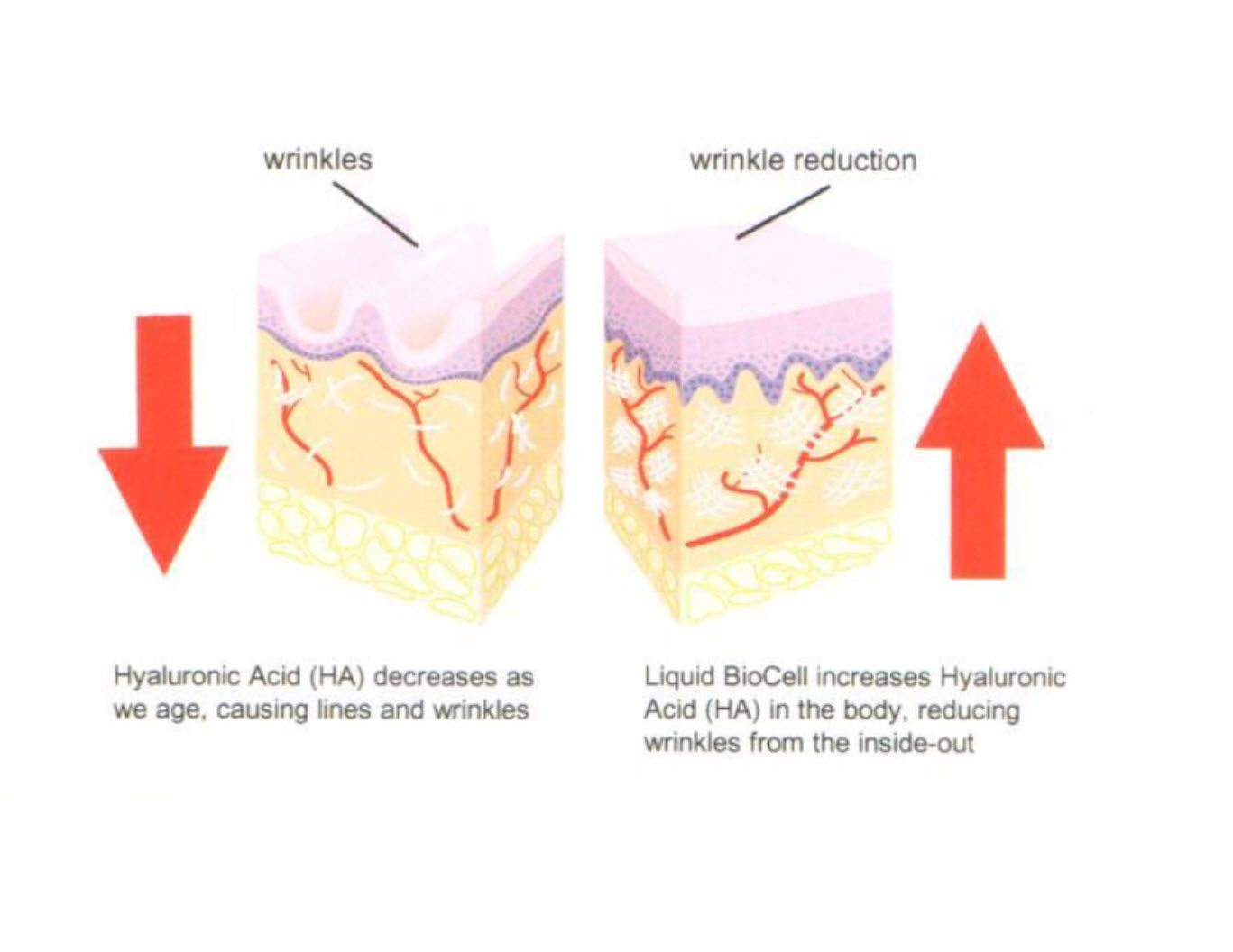
From around 30, and accelerating in the 40s, we produce less. Skin cells become less active; the collagen network breaks down; skin dehydrates and thins; lines appear. Bone turnover tilts toward loss. Cartilage and joint function decline. Muscle mass and strength fade. UV, pollution, and lifestyle can hurry all of it.
But is collagen enough? Collagen is a brick. We still need cement. That cement is hyaluronic acid — hydration for skin, lubrication for joints, the gel that holds cells together. The other essential, especially for joints, is chondroitin sulfate, which gives cartilage its shock-absorbing properties.
How to choose a formula that works: look for one that mirrors how the body is built — about 60% collagen, 20% chondroitin sulfate, 10% hyaluronic acid, 10% other. It should not be a mixture but a natural matrix. Optimized molecule size (1.5–2.5 kDa). It should deactivate hyaluronidase. It should be liquid, absorbed starting under the tongue, and proven clinically.
These statements have not been evaluated by the Food and Drug Administration. These products are not intended to diagnose, treat, cure, or prevent any disease. Individual results vary. This site is educational and is not a substitute for medical advice.
← All notes